
Quick Answer :- Third-Party Antibiotic Injection Manufacturer in India
A third-party manufacturer is basically who actually makes the antibiotic injection you sell under your own brand name — think Amoxicillin, Ceftriaxone, or Piperacillin-Tazobactam — in a WHO-GMP certified facility. You handle the marketing and sales; they handle sourcing raw materials, sterile filling, packaging, and quality testing. Your name goes on the box, but their plant does the actual work.
India makes a huge share of the world’s injectable antibiotics, and 2026 has only pushed that further.
Hospitals, government tenders, and export buyers all want the same thing: a steady supply of antibiotic injections that pass quality checks every single time. That’s why so many pharma brands, big and small, now work with a third-party antibiotic injection manufacturing partner in India instead of building their own plant from scratch.
If you’re searching for an antibiotic-injection manufacturer in India, you’ve probably noticed the market is crowded. Not every company that claims WHO-GMP status actually meets that standard every day.
This guide walks through what a genuine antibiotic injection manufacturing company in India should offer, what WHO-GMP certification actually means for your product, and how to pick a manufacturing partner you won’t regret later.
Why Choose a Third-Party Antibiotic Injection Manufacturing in India
Setting up your own injectable facility costs crores in equipment, licensing, and staff, and it takes years before you see a return. Working with an established antibiotic injection manufacturing company in India skips all of that. You get access to sterile manufacturing lines, quality control labs, and regulatory documentation without the capital outlay.

There’s also the matter of speed. A brand that partners with a third-party antibiotic injection manufacturing company in India can launch a new SKU in weeks rather than months. This is because the production lines, sterility testing, and packaging setup already exist. For smaller pharma marketing companies and exporters, this is often the only realistic way to compete with larger players.
What WHO-GMP Certification Actually Means
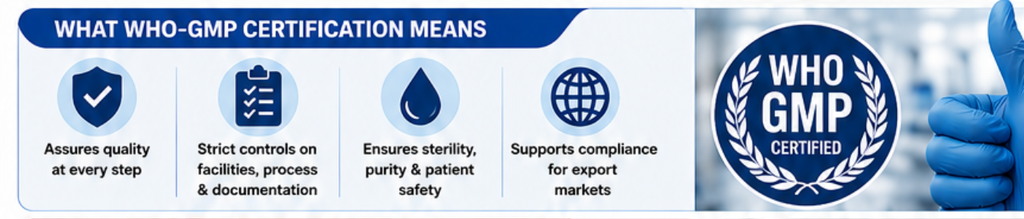
WHO-GMP isn’t a certificate you frame and forget. It covers everything from how raw materials are stored to how the water used in manufacturing is purified, tested, and monitored. A good WHO-GMP antibiotic injection manufacturer takes care of sterility, cleanroom classification, and batch documentation.
This is exactly the kind of discipline you want from any antibiotic injection manufacturing company in India before you put your brand name on their product.
Why It Matters More for Injectables
Injectables go straight into the bloodstream. There is no room for contamination, incorrect potency, or endotoxin issues. A single lapse in sterility isn’t just a quality problem; it’s a patient safety problem. That’s why regulators scrutinise injectable lines far more closely than tablets or syrups.
How to Verify the Certificate
When you’re vetting an Antibiotic Injection Manufacturer in India, ask to see the actual WHO-GMP certificate, not just a logo on the website. Check the issuing authority and the certificate’s validity date, and confirm it covers the specific product line you need rather than the facility as a whole. Good manufacturers will share this without hesitation, along with recent audit reports if you ask for them.
Red Flags To Watch Out For
Some warning signs are easy to see if you know what to look for. Be suspicious of a manufacturer that is unclear about its certifying body, won’t grant a facility visit or can’t provide batch records for previous orders. Also, watch out for frequent changes of quality staff, unexplained gaps in the documentation and pricing well below the market average before you sign a contract.
Why It Matters for Export Markets
Countries with strict regulatory bodies, including several in Africa, Southeast Asia, and Latin America, require WHO-GMP documentation before they’ll clear an antibiotic injection for import. If you’re planning to export, working with an already WHO-GMP compliant manufacturer saves you months of separate certification and registration work down the line. It also makes it easier to get products cleared during customs checks.
How Third Party Manufacturing Actually Works
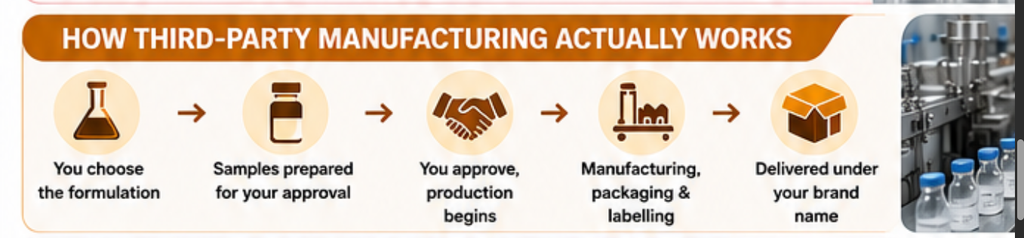
The process is simpler than people expect.
- You choose your formulation (say, Amoxicillin, Ceftriaxone, or Piperacillin-Tazobactam injections.
- The antibiotic injectable manufacturer prepares samples for your approval
- Once you sign off, production begins under your brand name.
- The manufacturer handles sourcing of active pharmaceutical ingredients, formulation, sterile filling, lyophilisation where needed, packaging, and labelling.
What to Check Before Signing a Contract
Price matters, but it shouldn’t be the first thing you look at.
- Start with the manufacturing licence and WHO-GMP status.
- Do they have or make a wide range of formulations?
- Does the Antibiotic Injectable Manufacturer already produce the molecule you need, or will they have to develop it from scratch? Existing capability usually means faster turnaround and fewer surprises.
- Ask about batch size flexibility too. Some companies force a minimum order quantity that’s too high for a new brand to handle. Prefer the one that offers flexible batch sizes.
- Check their credibility by asking about stability testing and shelf-life data.

The Bottom Line:
It is important to choose the right third-party antibiotic injection manufacturer. While WHO-GMP is the first thing to look for, make sure to review their delivery time, prices, and support. The right Antibiotic Injection Manufacturing Company in India will make your brand look good batch after batch for years to come.
🌐 Follow Us on Social Media 🌐
FAQs
Q1. What is a third-party antibiotic injection maker?
Ans. A third-party antibiotic injection manufacturer makes antibiotic injections on your behalf.
Q2. Why is WHO-GMP certification important for antibiotic injections?
Ans. Antibiotic injections are directly introduced into the bloodstream. Any contamination or error in dosage is a serious risk. WHO-GMP certification means the manufacturer follows internationally recognised, strict standards for sterility, testing and documentation.
Q3. What is the time it takes to launch a product with a third-party manufacturer?
Ans. Generally, it takes four to eight weeks depending on whether the molecule is in production or needs new formulation and stability testing.
Q4. What molecules of antibiotics can be made as injections?
Ans. Examples include Amoxicillin, Ceftriaxone, Cefotaxime, Piperacillin-Tazobactam, Meropenem, Amikacin and many others depending upon the range of products of the manufacturer.
Q5. Is third-party manufacturing the best option for small pharma brands?
Ans. Yes, this is a practical route for smaller brands, as it avoids the massive upfront cost of building a sterile injectable facility.
Q6. What documents should I request before signing a contract?
Ans. Ask to see the WHO-GMP certificate, manufacturing license, product-specific stability data and sample certificates of analysis for recent batches.